For decades, India\'s rental housing market has been characterized by outdated rent control laws that heavily favored tenants, leading to dilapidated buildings and landlords too scared to rent out their vacant properties. To overhaul this broken system, the central government introduced the Model Tenancy Act (MTA) in 2021.
The Model Tenancy Act aims to balance the scales between landlords and tenants, bringing transparency and accountability to the rental market. It seeks to institutionalize renting, making it a viable, secure business for landlords while protecting tenants from arbitrary evictions and unfair financial demands. This comprehensive guide explains the core pillars of the MTA, how it impacts your everyday rental agreements, and what it means for the future of Indian real estate.
1. What is the Model Tenancy Act?
The Model Tenancy Act is a comprehensive legal framework drafted by the Ministry of Housing and Urban Affairs. Its primary objective is to regulate the rental housing market, promote investment in residential properties, and establish a speedy dispute resolution mechanism that bypasses the traditional civil court system.
2. Key Features of the Model Tenancy Act
If enacted in your state, the MTA introduces several revolutionary changes that drastically alter how rental agreements are drafted and executed.
Mandatory Registration of Agreements
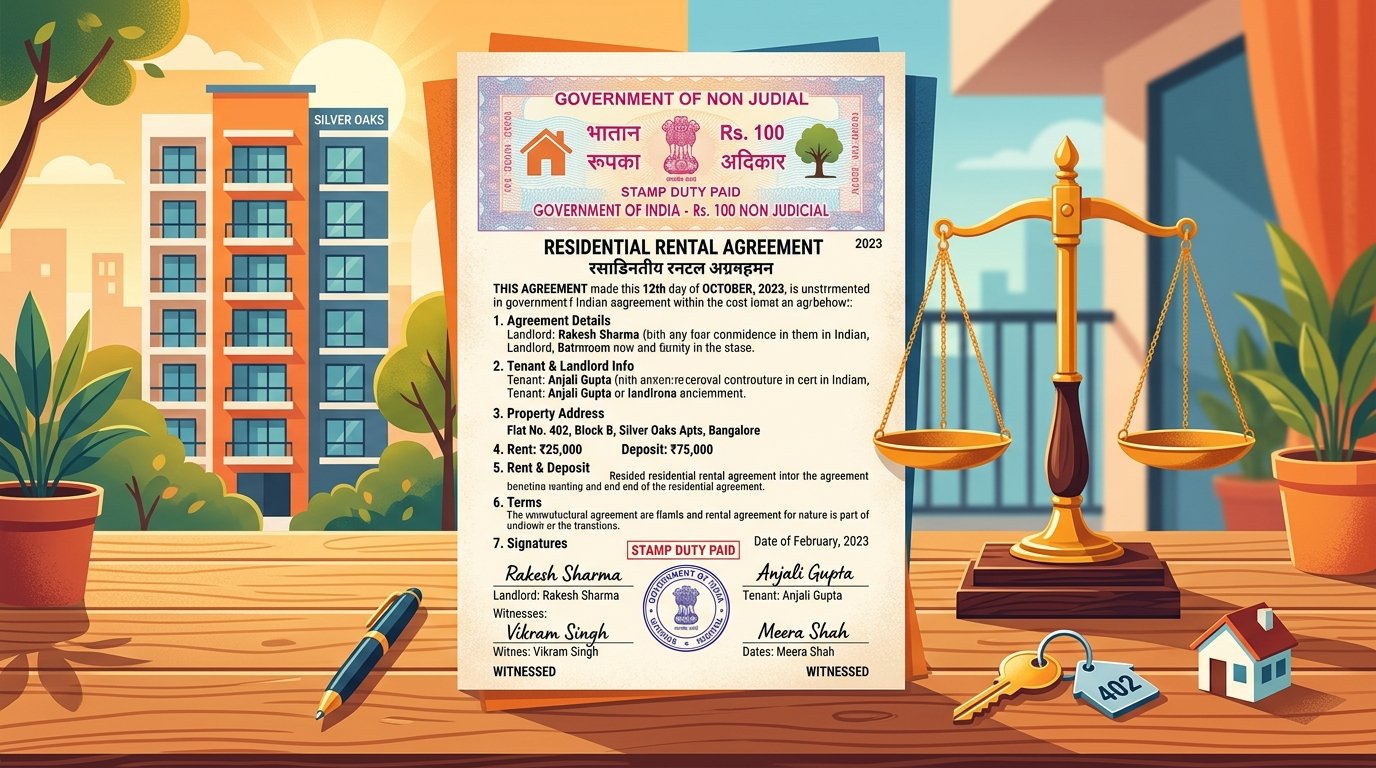
Under the MTA, oral agreements are completely unrecognized. All rental agreements must be in writing. Furthermore, landlords and tenants must jointly submit a formal intimation of the rental agreement to a designated Rent Authority within two months from the date of the agreement. The Rent Authority will then issue a unique registration number, bringing the tenancy onto the official record. This digital footprint ensures both parties are accountable to the signed terms.
Strict Caps on Security Deposits
One of the most tenant-friendly provisions of the MTA is the cap on security deposits. In unregulated markets like Bengaluru, landlords frequently demanded six to ten months of rent upfront. The MTA strictly caps security deposits at:
- Residential Properties: A maximum of two months\' rent.
- Commercial/Non-Residential Properties: A maximum of six months\' rent.
Regulating Rent Increases
Landlords can no longer arbitrarily increase rent in the middle of a lease. Rent escalation must occur precisely according to the terms mutually agreed upon in the signed rental agreement. If a landlord wishes to revise the rent outside of the scheduled escalation clause, they must give a mandatory three months\' written advance notice to the tenant before the revised rent becomes applicable.
3. Step-by-Step Speedy Dispute Resolution
The MTA establishes a three-tier quasi-judicial mechanism to completely bypass the notoriously slow civil courts. This is designed to provide justice within a strict timeframe:
- Rent Authority: Appointed by the District Collector, this officer handles initial registrations, administrative matters, and minor disputes regarding maintenance and repairs.
- Rent Court: An Adjudicating Officer appointed by the State Government to hear eviction suits and major contractual breaches.
- Rent Tribunal: An appellate body led by a District Judge to hear appeals against the Rent Court\'s orders.
The law explicitly mandates that these bodies must resolve disputes within 60 days of the application, ensuring speedy justice for both landlords seeking eviction and tenants facing harassment.
4. Landlord & Tenant Responsibilities Under MTA
To prevent petty disputes, the Act clearly demarcates the maintenance responsibilities of both parties.
| Landlord Responsibilities (Structural) | Tenant Responsibilities (Day-to-Day) |
|---|---|
| Structural repairs (roof leaks, major wall cracks) | Fixing leaking taps and changing tap washers |
| Whitewashing and painting exterior walls | Drain cleaning and fixing minor plumbing blockages |
| Wiring repairs and major plumbing overhauls | Replacing burnt-out switches, sockets, and bulbs |
| Replacing damaged internal water pipes | General housekeeping and glass window replacements |
If the landlord refuses to carry out structural repairs despite written notice, the tenant can legally execute the repairs and deduct the cost from the rent (up to 50% of the monthly rent). Conversely, if the tenant fails to do day-to-day repairs, the landlord can fix them and deduct the cost from the security deposit.
5. Stricter Rules on Eviction & Holdover Tenants
The MTA makes eviction a straightforward, legal process rather than a physical battle, provided the landlord has valid grounds. Valid grounds include two months of unpaid rent, illegal subletting, or structural misuse of the property.
A major win for landlords is the strict penalty for "holdover" tenants—those who refuse to vacate after the lease expires. The MTA states that if a tenant refuses to leave, the landlord is legally entitled to double the monthly rent for the first two months, and four times the monthly rent thereafter until the tenant vacates. This severely discourages squatting.
6. Implications for Property Managers
The Act brings Property Managers legally into the fold. A property manager must furnish their details to the Rent Authority. If they act on behalf of the landlord to collect rent, carry out inspections, or handle maintenance, they are legally bound by the terms of the agreement. They can be penalized by the Rent Authority if they arbitrarily disconnect essential services or harass the tenant without the landlord's consent.
7. Common Misconceptions About the MTA
- Myth: The MTA cancels all existing 11-month agreements.
Fact: The MTA applies prospectively. Existing rental agreements will continue to be governed by the older state Rent Control Acts until the lease expires and is renewed. - Myth: 11-month agreements are no longer valid.
Fact: They are valid, but under the MTA framework, they must still be officially intimated to the Rent Authority to receive a registration number, closing the loophole of unregistered 11-month leases.
Conclusion
The Model Tenancy Act represents a massive leap forward for India\'s real estate sector. By balancing the rights of property owners with the security needs of tenants, it sets a gold standard for fairness, transparency, and accountability. Whether you are drafting a new lease or dealing with a dispute, understanding the principles of the MTA helps you negotiate better terms and conduct your tenancy with utmost professionalism.