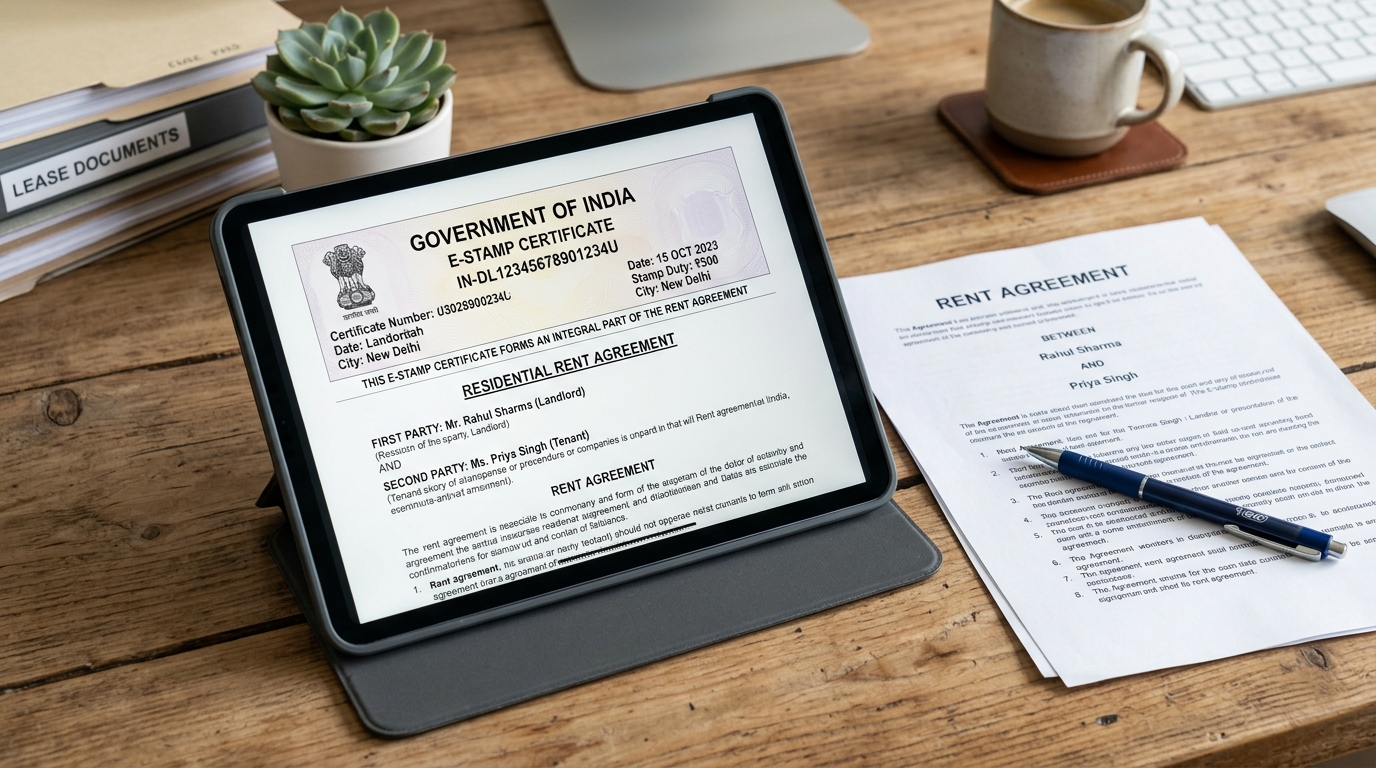
With millions of Indian properties owned by Non-Resident Indians (NRIs), senior citizens living in other cities, or institutional investors, executing a rent agreement without the landlord being physically present has become a standard requirement. The good news is that Indian property and contract laws provide several foolproof, 100% legal methods to execute valid rental contracts remotely.
Whether your landlord is based in the United States, Dubai, London, or simply living in a different Indian state, executing a tenancy contract requires strict compliance with the Powers of Attorney Act, 1882, the Information Technology Act, 2000, and state registration guidelines. Here is the comprehensive roadmap on how tenants and property owners can smoothly finalize a rental deed remotely.
1. The 3 Legal Methods to Execute a Rent Agreement Remotely
Method A: Special Power of Attorney (SPA / GPA)
The most common and traditional mechanism involves the property owner appointing a trusted representative (family member, friend, or real estate lawyer) through a formal Power of Attorney:
- For Domestic Landlords: The owner drafts a Special Power of Attorney (SPA) explicitly granting the representative powers to rent out the specific property, sign agreements, collect deposits, and handle repairs. This SPA must be notarized or registered in the local sub-registrar's jurisdiction.
- For NRI Landlords: The NRI owner signs the PoA at the Indian Embassy or Consulate in their country of residence, gets it apostilled/notarized, and sends it to India. The representative in India must get it adjudicated at the local District Registrar office within three months of arrival in India.
Method B: Aadhaar-Based Digital e-Signing (IT Act 2000)
Modern e-Governance systems enable landlords to execute agreements from anywhere in the world in minutes:
- Both parties review the finalized digital draft.
- The draft is uploaded to an authorized Digital Signature / UIDAI e-Sign platform.
- The landlord receives an OTP on their Aadhaar-linked Indian mobile number (or uses a Class 3 Digital Signature Certificate DSC).
- Once digitally signed by landlord, tenant, and witnesses, the document carries statutory evidentiary value under Section 65B of the Indian Evidence Act.
Method C: Doorstep Remote Biometric e-Registration
In states like Maharashtra (i-Sarita portal), the registration department allows independent biometric verification sessions. The sub-registrar service provider visits the tenant at the property location in Pune/Mumbai and conducts biometric capture for the owner at their respective Indian residence city, merging both digital verifications onto the unified registry.
2. Essential Clauses Required in an Absentee-Owner Agreement
To avoid fraud and ensure smooth tenancy operations, every agreement involving an absent owner should clearly articulate the following provisions:
| Clause | Why It Is Crucial | Recommended Phrasing |
|---|---|---|
| Bank Account Verification | Ensures rent and deposits are transferred directly to the legal owner, not diverted by agents. | "All rent payments shall be made solely to the Landlord's designated NRE/NRO/Savings account ending in XXXX." |
| Local Representative Powers | Clarifies what the local caretaker or manager can and cannot do. | "The local agent is authorized solely for routine maintenance coordination and possesses no authority to modify lease terms." |
| Notice via Electronic Mail | Allows legal communication without reliance on physical letters. | "All official notices, termination intimations, and inspection requests sent to verified email addresses shall constitute valid service." |
| Virtual Inspection Protocol | Balances landlord oversight with tenant privacy. | "Landlord reserves right to conduct scheduled quarterly video walkthrough inspections with 48 hours prior notice." |
3. Red Flags Tenants Must Check Before Signing
Renting a property when the owner is absent carries specific risks. Tenants must exercise due diligence to avoid subletting fraud or fake landlord scams:
- Verify Property Ownership: Request latest property tax paid receipts, electricity bill in the owner's name, or Title Deed / Index-II copy.
- Verify the PoA Deed: Ensure the Power of Attorney explicitly mentions "authority to lease/rent", has not expired, and contains the owner's valid signature and government seal.
- Demand a Video Call: Never finalize a deal or transfer token advance money without conducting a face-to-face video call with the actual title holder.
- Direct Payment Only: Never pay the security deposit or monthly rent in cash to a broker, neighbor, or caretaker. Always use NEFT/RTGS/UPI directly to the title owner's personal bank account.