The Great Landlord Fear
One of the most persistent and terrifying urban legends among property owners in India is the "12-Year Rule." It is widely believed that if a tenant occupies a property continuously for 12 years, they magically gain legal ownership of the property, leaving the actual owner powerless.
This fear has led landlords to evict good tenants every 11 months or intentionally leave properties vacant. But how much truth is there to this myth? This article unpacks the complex legal doctrine of Adverse Possession in India.
What is Adverse Possession?
Adverse possession is a legal principle rooted in the Limitation Act, 1963. The law states that if a person holds adverse possession of a private property for a continuous period of 12 years (or 30 years for government property), the original owner loses their right to reclaim the property, and the possessor acquires legal title.
The philosophical reasoning behind this ancient law is that land should not be left abandoned and unused by negligent owners, and courts will not entertain claims over property that the owner has ignored for over a decade.
The Crucial Distinction: Permissive vs. Adverse Possession
Here is the absolute key to understanding the law: A tenant's possession is NEVER adverse; it is permissive.
When you rent out your property, you grant the tenant "permissive possession" through a rental agreement (written or oral). The tenant occupies the property with your explicit consent and in exchange for rent.
The Supreme Court of India has repeatedly ruled that a tenant cannot claim adverse possession, regardless of whether they have lived there for 12 years, 50 years, or generations. As long as the relationship began as landlord-tenant, the possession remains permissive.
When Does Possession Actually Become "Adverse"?
For a claim of adverse possession to succeed in court, the occupant\'s possession must fulfill three strict criteria (often referred to as nec vi, nec clam, nec precario):
- Hostile: The occupant must possess the property in clear denial of the true owner\'s title. They cannot be paying rent or acknowledging the owner.
- Open and Notorious: The possession must be publicly known and visible, not hidden. The true owner must have a reasonable opportunity to know someone has encroached on their land.
- Continuous: The hostile possession must be uninterrupted for a full 12 years.
Example of Adverse Possession: You own a vacant plot of land in a distant city and never visit it. A squatter builds a house on it, pays property tax in their name, gets an electricity meter in their name, and lives there openly for 13 years while you do nothing. The squatter can claim adverse possession.
How Landlords Can Protect Themselves
While a rent-paying tenant cannot claim adverse possession, a tenant who stops paying rent, refuses to leave, and explicitly denies your ownership might trigger the 12-year clock if you do not initiate legal eviction proceedings.
| Protection Strategy | Why it Works |
|---|---|
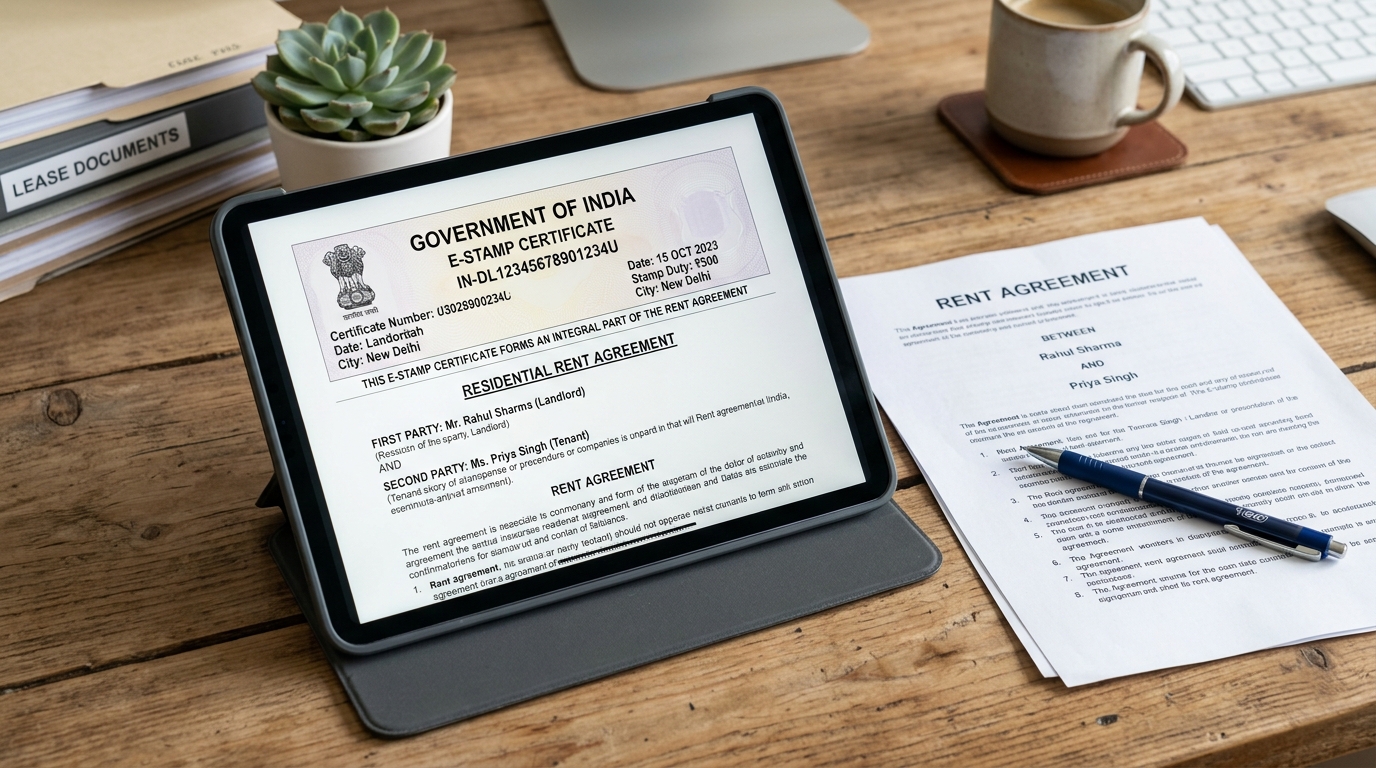
| Written and Registered Agreements | Provides irrefutable proof that the possession was permissive and established a landlord-tenant relationship. |
| Periodic Renewals | Renewing the agreement every 11 months re-establishes the permissive nature of the tenancy on paper. |
| Never Accept Cash Without Receipt | Always accept rent via bank transfer or issue a signed receipt. This proves the tenant is acknowledging your ownership by paying rent. |
| Immediate Legal Action on Default | If a tenant stops paying rent and refuses to leave, do not wait years to file an eviction suit. File immediately to stop any potential limitation clocks. |
Frequently Asked Questions (FAQ)
If my family has rented a shop since 1970 under the Pagdi system, do we own it now?
No. Even if you have occupied the shop for 50 years and pay only ₹50 a month, the fact that you pay rent (however small) means your possession is permissive, not adverse. You are highly protected against eviction by rent control laws, but you do not hold the title deed.
Can an oral agreement lead to adverse possession?
It makes it riskier. If there is no written agreement and the tenant stops paying rent in cash, they could falsely claim in court that they entered the property hostilely 12 years ago. The burden of proof would fall heavily on the landlord, highlighting the danger of oral leases.