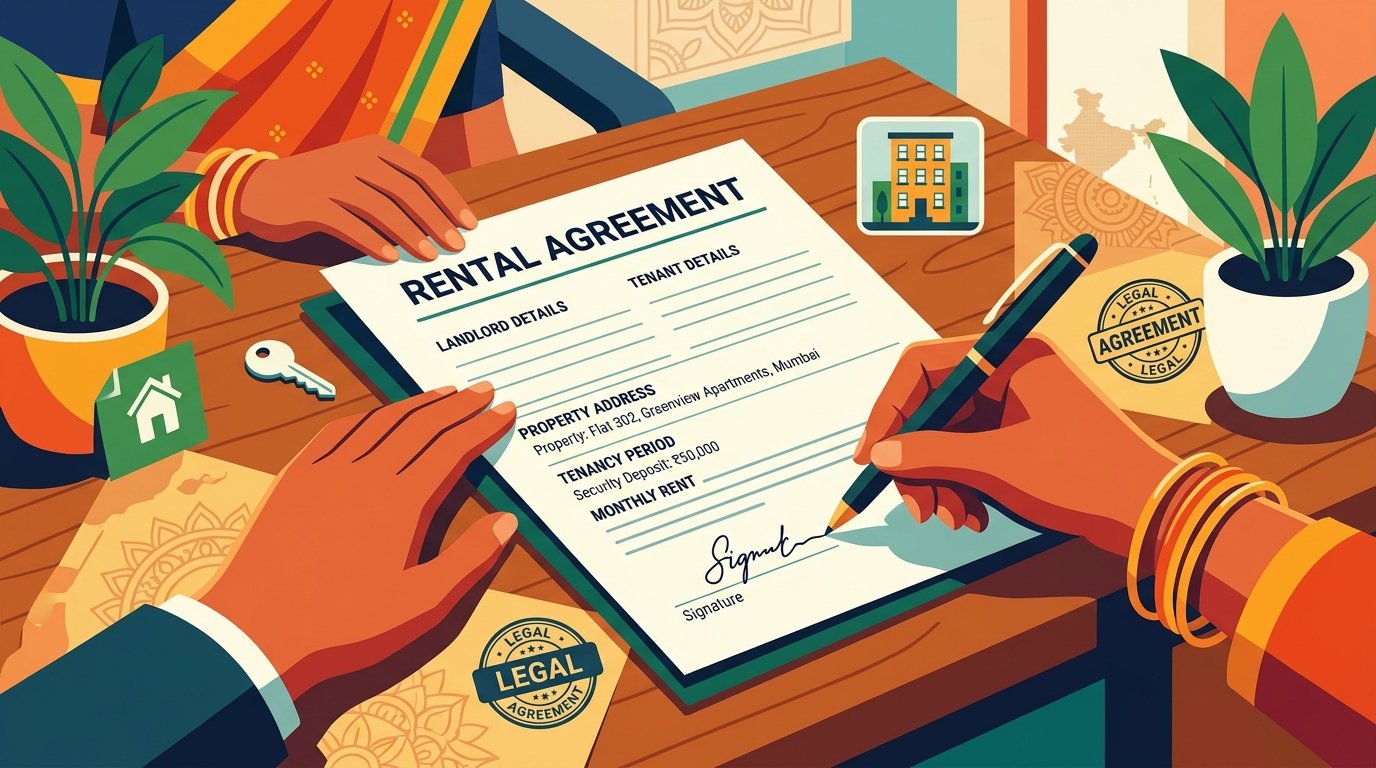
A well-drafted rental agreement is the foundation of a peaceful landlord-tenant relationship. Whether you are renting out your first property or moving into a new apartment, understanding the terms of your lease can prevent costly disputes and legal headaches down the line.
In India, a rental agreement (often called a lease agreement or leave and license agreement) is a legally binding contract that outlines the rights, responsibilities, and obligations of both the owner and the occupant. Despite its importance, many renters and landlords rely on generic templates without fully understanding the legal implications of what they are signing.
What is a Rental Agreement and Why Does it Matter?
At its core, a rental agreement is a contract where the property owner (landlord or licensor) grants someone else (tenant or licensee) the right to occupy a premises for a specific duration, in exchange for a mutually agreed payment (rent).
While oral agreements are technically recognized under some local laws, they are notoriously difficult to enforce in a court of law. A written agreement is highly recommended to ensure absolute clarity and provide documentary evidence in case a dispute arises regarding rent payments, damages, or eviction.
Types of Rental Contracts in India
Generally, residential rentals in India fall into two primary legal categories:
- Lease Agreement: Governed by the Transfer of Property Act, 1882. A lease creates an actual interest in the property for the tenant. It is typically used for long-term commercial renting or tenancies exceeding 11 months. A lease grants exclusive possession to the tenant.
- Leave and License Agreement: Governed by the Indian Easements Act, 1882. This grants mere permission to occupy the property without creating any permanent property rights or interest for the licensee. The owner retains legal possession. It is the most common format for residential renting in cities like Mumbai, Pune, and Bengaluru, as it offers landlords better protection against squatting.
Essential Clauses Every Agreement Must Have
Do not sign an agreement without verifying these critical clauses. Missing or vague clauses are the leading cause of landlord-tenant disputes in India.
| Clause | Why it Matters & What to Check |
|---|---|
| Term of Tenancy | Clearly states the start date and end date of the agreement. Usually 11 months for standard residential contracts. Ensure the start date matches your actual move-in date. |
| Rent and Deposit | Specifies the exact monthly rent, due date, payment method, and the refundable security deposit amount. State clearly when the deposit must be returned upon vacating. |
| Notice Period | Defines how much advance notice (usually 30 to 60 days) either party must give before terminating the agreement early. Ensure it is mutually binding. |
| Lock-in Period | A strict period (e.g., 6 months) during which neither party can terminate the agreement without paying a penalty. Avoid locking in for the entire 11 months. |
| Maintenance & Repairs | Clarifies who pays for society maintenance, minor day-to-day repairs, and major structural damages. Typically, tenants handle minor wear-and-tear, while landlords handle structural issues. |
| Rent Escalation | If renewing, this clause dictates the percentage by which rent will increase (typically 5% to 10% annually). Avoid vague terms like "at market value." |
The 11-Month Agreement Myth
A common misconception in the Indian rental market is that an 11-month agreement completely bypasses the need for legal formalities.
Under Section 17 of the Registration Act, 1908, any lease of immovable property from year to year, or for any term exceeding one year, must be compulsorily registered. To avoid the time, effort, and high stamp duty associated with registration, landlords and tenants often restrict the term to exactly 11 months.
Stamp Duty and Registration Requirements
Even if an agreement is for 11 months and unregistered, it must still be executed on a non-judicial stamp paper of appropriate value to be legally valid. If the document is under-stamped, it may not be admissible as evidence in a court of law unless the deficit and hefty penalties are paid.
Registration adds an extra layer of undeniable legal validity. It involves paying a registration fee, calculating stamp duty based on the total rent and deposit, and having the document signed in the presence of the Sub-Registrar of Assurances. Registered agreements are much stronger in the eyes of the law during eviction or deposit recovery disputes.
Who Pays for Stamp Duty?
While the law does not strictly dictate who must bear the cost of stamp duty and registration, standard market practice across India is for the tenant to pay, or for both parties to split the cost equally (50-50). This should be explicitly discussed and agreed upon before drafting the document.
Understanding the Model Tenancy Act
The Government of India approved the Model Tenancy Act (MTA) in 2021 to overhaul the rental market. It aims to balance the rights of both landlords and tenants by establishing Rent Authorities and capping security deposits (e.g., maximum two months' rent for residential properties).
However, it is crucial to understand that the MTA is merely a central model framework. It does not automatically apply throughout India. Because "land" and "housing" are state subjects under the Indian Constitution, individual state governments must adopt the MTA or amend their existing rent control acts. Always rely on the enacted laws of your specific state rather than assuming the MTA applies to your tenancy.
Common Mistakes to Avoid Before Signing
- Skipping Police Verification: Failing to submit tenant details to the local police station can result in penalties for the landlord under Section 188 of the Indian Penal Code. It is a mandatory security measure in most major cities.
- Ignoring the Inventory List: Always attach an annexure detailing the existing fixtures, furniture, electrical fittings, and their exact condition. Take photos on move-in day. This prevents disputes over deductions when you move out.
- Vague Subletting Clauses: The agreement should explicitly state whether subletting is allowed or prohibited. Most standard agreements strictly prohibit subletting without written consent from the landlord.
- Paying in Cash: Always pay rent and the security deposit via bank transfer, UPI, or cheque. Avoid cash transactions to ensure you have a verifiable paper trail for tax purposes (HRA claims) and legal safety.
Conclusion
A comprehensive, well-drafted rental agreement protects your finances and your peace of mind. Take the time to read every single clause, negotiate terms that feel unfair or heavily one-sided, and ensure the final document is properly stamped and signed by all parties. For maximum security, utilize professional tools and legal frameworks to draft an agreement that covers all bases, rather than relying on outdated photocopied templates from local brokers.