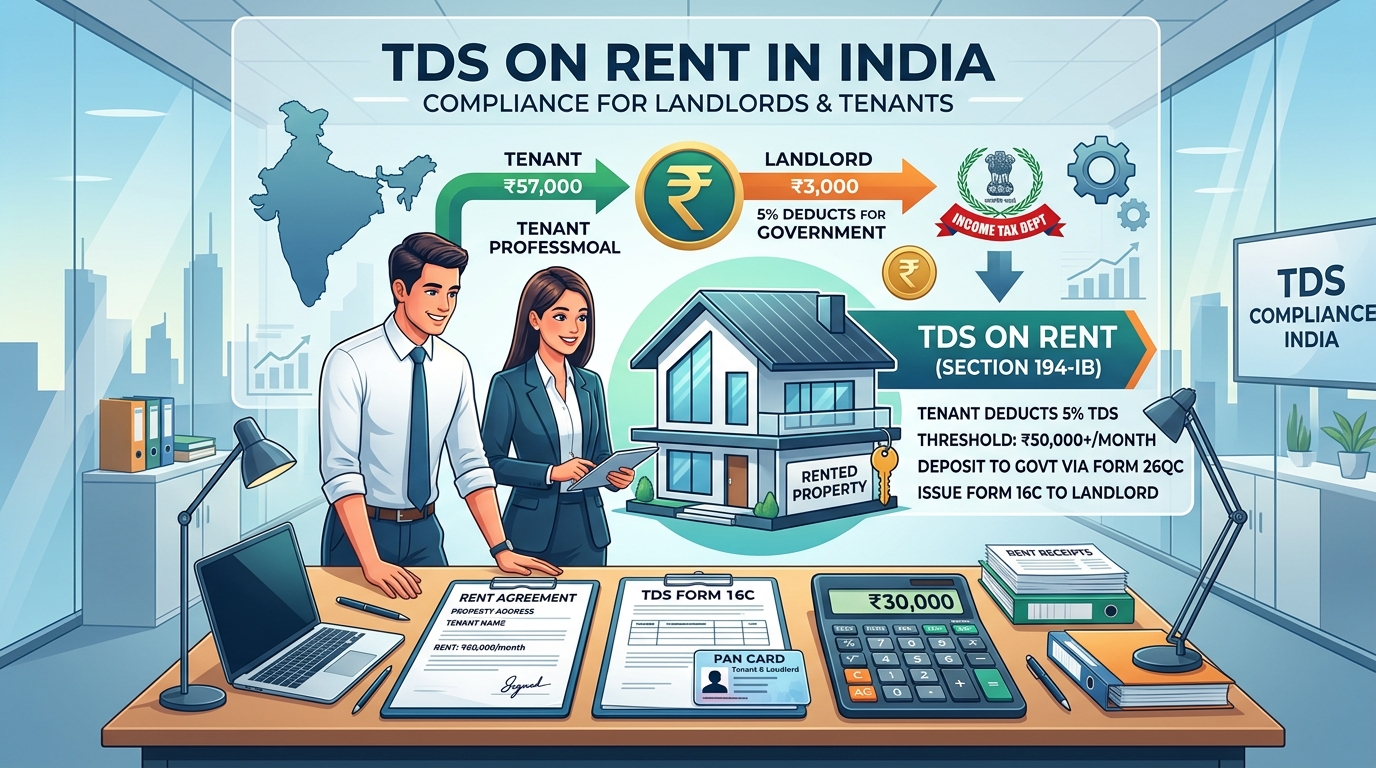
Introduction to TDS on Rent Above ???50,000: Section 194-IB Complete Guide
Navigating the complex landscape of taxation, real estate, and financial compliance can be a daunting task for many individuals in India. Whether you are a salaried employee looking to claim House Rent Allowance (HRA) exemptions, a landlord receiving substantial rental income, or a tenant trying to understand their obligations, having a clear grasp of the rules is essential. This comprehensive guide aims to shed light on everything you need to know about TDS on Rent Above ???50,000: Section 194-IB Complete Guide, offering step-by-step instructions, essential insights, and practical tips.
Key Components and Provisions
Understanding the key components and provisions related to TDS on Rent Above ???50,000: Section 194-IB Complete Guide is critical to maintaining full compliance with the Income Tax Department and other regulatory bodies. The framework surrounding rent, tax deductions, and required documentation has been designed to increase transparency and track high-value transactions effectively. Let's delve into the specific details.
Why is this Important?
Compliance is not just about avoiding penalties; it is about ensuring smooth financial transactions. Over the years, the government has introduced several measures to bring rental income into the tax net. For tenants, failing to adhere to these rules could mean losing out on valuable tax exemptions, while for landlords, it could result in severe scrutiny from tax authorities.
| Aspect | Details |
|---|---|
| Applicability | Applies to specific taxpayers based on the transaction value or type. |
| Threshold Limits | Varies depending on the exact section (e.g., ???50,000 per month for some TDS sections). |
| Penalties | Late filing or non-compliance attracts interest and penalty fees. |
Step-by-Step Guide to Compliance
To help you navigate the process efficiently, we have outlined a straightforward, step-by-step approach. By following these guidelines, you can ensure that you meet all the necessary requirements without unnecessary hassle.
Step 1: Gather Required Documents
Before initiating any formal process, make sure you have all the essential documents at hand. This typically includes the PAN cards of both the landlord and the tenant, the rental agreement, and any previous rent receipts. Having these documents ready will significantly speed up the process.
Step 2: Understand the Calculations
Accuracy is key. Miscalculations can lead to incorrect filings, which in turn can trigger notices from the tax department. Ensure that you calculate the exact amount of rent paid, the applicable tax rate (usually 5% for certain TDS provisions), and the final amount to be deducted or claimed.
Step 3: Online Filing and Submission
The Income Tax e-filing portal provides a seamless way to submit necessary forms and declarations. Navigate to the relevant section (such as e-Pay Tax or specific form submissions like 26QC) and fill in the details accurately. Review all information before final submission.
Frequently Asked Questions (FAQs)
What happens in case of a delay?
A delay in compliance usually results in a late fee under Section 234E and interest on the late payment of tax under Section 201(1A). It is highly advisable to adhere to the prescribed deadlines, which typically fall within 30 days from the end of the month in which the deduction is made.
Can the process be done entirely online?
Yes, the government has digitized most of the tax-related processes. From generating challans to downloading certificates, the entire workflow can be managed through the official TRACES or e-filing portals.
Conclusion
In conclusion, staying informed about TDS on Rent Above ???50,000: Section 194-IB Complete Guide is an indispensable part of financial planning in India. By understanding the rules, keeping your documents organized, and utilizing the online portals effectively, you can ensure a hassle-free experience. Remember, timely compliance not only saves you from penalties but also contributes to the nation's economic transparency.
Detailed Analysis of Regulatory Framework
The regulatory framework governing this domain is continuously evolving. Taxpayers must remain vigilant about the latest notifications and circulars issued by the Central Board of Direct Taxes (CBDT). The objective of these regulations is to curb tax evasion and ensure that income generated from real estate and rental properties is accurately reported. Furthermore, the digitization of the tax administration has made it easier for authorities to cross-verify data provided by different parties in a transaction. For instance, the information provided by a tenant while claiming HRA is often cross-matched with the landlord's income tax return to detect discrepancies.
When analyzing the broader implications, it becomes evident that formalizing the rental sector has long-term benefits for the economy. It encourages transparency, protects the rights of both tenants and landlords, and creates a more robust financial ecosystem. The introduction of specific forms and procedures is a testament to the government's commitment to streamlining this sector. Therefore, taxpayers should view these compliance requirements not as a burden, but as a standard operating procedure for financial transparency.
Impact on Tenants
For tenants, understanding these rules is crucial for effective tax planning. The House Rent Allowance (HRA) is a significant component of the salary structure for many employees. To maximize the tax benefit, it is essential to provide accurate rent receipts and, where necessary, the landlord's Permanent Account Number (PAN). Failure to do so can result in the employer rejecting the HRA exemption claim, thereby increasing the employee's tax liability. In cases where the rent is substantial (exceeding certain thresholds), the responsibility of deducting tax at source (TDS) also falls on the tenant. This requires a clear understanding of the timelines, forms, and procedures involved.
Impact on Landlords
From the landlord's perspective, receiving rent is a taxable event under the head 'Income from House Property'. The government allows for a standard deduction, which covers maintenance and other expenses, but the remaining amount is taxed at the applicable slab rate. When a tenant deducts TDS, it is reflected in the landlord's Form 26AS. The landlord must ensure that they claim credit for this deducted tax while filing their Income Tax Return (ITR). Additionally, if a landlord refuses to provide their PAN to a tenant, they may be subject to a higher rate of TDS, which can significantly affect their cash flow.
Best Practices for Smooth Compliance
- Maintain a Paper Trail: Always keep a record of the rental agreement, rent receipts, and any correspondence related to the rent. This documentation is invaluable in case of an audit or inquiry by the tax department.
- Timely Deductions and Payments: If you are required to deduct TDS, ensure that it is done precisely at the time of payment or credit, whichever is earlier. Deposit the deducted amount to the government treasury within the stipulated timeframe.
- Accurate Reporting: When filing the required forms, double-check all details, including PAN, address, and the amount of tax deducted. Even minor typographical errors can lead to processing delays and notices.
- Seek Professional Help: Tax laws can be intricate. Engaging the services of a Chartered Accountant or a qualified tax consultant can help you navigate the complexities and ensure full compliance.
Conclusion and Final Thoughts
To summarize, the intricacies surrounding {title} demand careful attention and proactive management. As the government continues to rely on technology to monitor high-value transactions, the margin for error is shrinking. By embracing these compliance requirements and integrating them into your routine financial management, you can avoid unnecessary complications and achieve peace of mind. We hope this guide has provided you with the clarity and confidence needed to handle your rental and tax obligations effectively.
Detailed Analysis of Regulatory Framework
The regulatory framework governing this domain is continuously evolving. Taxpayers must remain vigilant about the latest notifications and circulars issued by the Central Board of Direct Taxes (CBDT). The objective of these regulations is to curb tax evasion and ensure that income generated from real estate and rental properties is accurately reported. Furthermore, the digitization of the tax administration has made it easier for authorities to cross-verify data provided by different parties in a transaction. For instance, the information provided by a tenant while claiming HRA is often cross-matched with the landlord's income tax return to detect discrepancies.
When analyzing the broader implications, it becomes evident that formalizing the rental sector has long-term benefits for the economy. It encourages transparency, protects the rights of both tenants and landlords, and creates a more robust financial ecosystem. The introduction of specific forms and procedures is a testament to the government's commitment to streamlining this sector. Therefore, taxpayers should view these compliance requirements not as a burden, but as a standard operating procedure for financial transparency.
Impact on Tenants
For tenants, understanding these rules is crucial for effective tax planning. The House Rent Allowance (HRA) is a significant component of the salary structure for many employees. To maximize the tax benefit, it is essential to provide accurate rent receipts and, where necessary, the landlord's Permanent Account Number (PAN). Failure to do so can result in the employer rejecting the HRA exemption claim, thereby increasing the employee's tax liability. In cases where the rent is substantial (exceeding certain thresholds), the responsibility of deducting tax at source (TDS) also falls on the tenant. This requires a clear understanding of the timelines, forms, and procedures involved.
Impact on Landlords
From the landlord's perspective, receiving rent is a taxable event under the head 'Income from House Property'. The government allows for a standard deduction, which covers maintenance and other expenses, but the remaining amount is taxed at the applicable slab rate. When a tenant deducts TDS, it is reflected in the landlord's Form 26AS. The landlord must ensure that they claim credit for this deducted tax while filing their Income Tax Return (ITR). Additionally, if a landlord refuses to provide their PAN to a tenant, they may be subject to a higher rate of TDS, which can significantly affect their cash flow.
Best Practices for Smooth Compliance
- Maintain a Paper Trail: Always keep a record of the rental agreement, rent receipts, and any correspondence related to the rent. This documentation is invaluable in case of an audit or inquiry by the tax department.
- Timely Deductions and Payments: If you are required to deduct TDS, ensure that it is done precisely at the time of payment or credit, whichever is earlier. Deposit the deducted amount to the government treasury within the stipulated timeframe.
- Accurate Reporting: When filing the required forms, double-check all details, including PAN, address, and the amount of tax deducted. Even minor typographical errors can lead to processing delays and notices.
- Seek Professional Help: Tax laws can be intricate. Engaging the services of a Chartered Accountant or a qualified tax consultant can help you navigate the complexities and ensure full compliance.
Conclusion and Final Thoughts
To summarize, the intricacies surrounding {title} demand careful attention and proactive management. As the government continues to rely on technology to monitor high-value transactions, the margin for error is shrinking. By embracing these compliance requirements and integrating them into your routine financial management, you can avoid unnecessary complications and achieve peace of mind. We hope this guide has provided you with the clarity and confidence needed to handle your rental and tax obligations effectively.