Mumbai\'s real estate market is notoriously one of the most expensive and complex in the world. For generations, renting a home in this island city has been governed by unique, localized laws that confuse outsiders and even locals. If you are planning to rent in Mumbai, you must navigate a market neatly split into two entirely different legal universes, each with its own set of rules, risks, and massive financial implications.
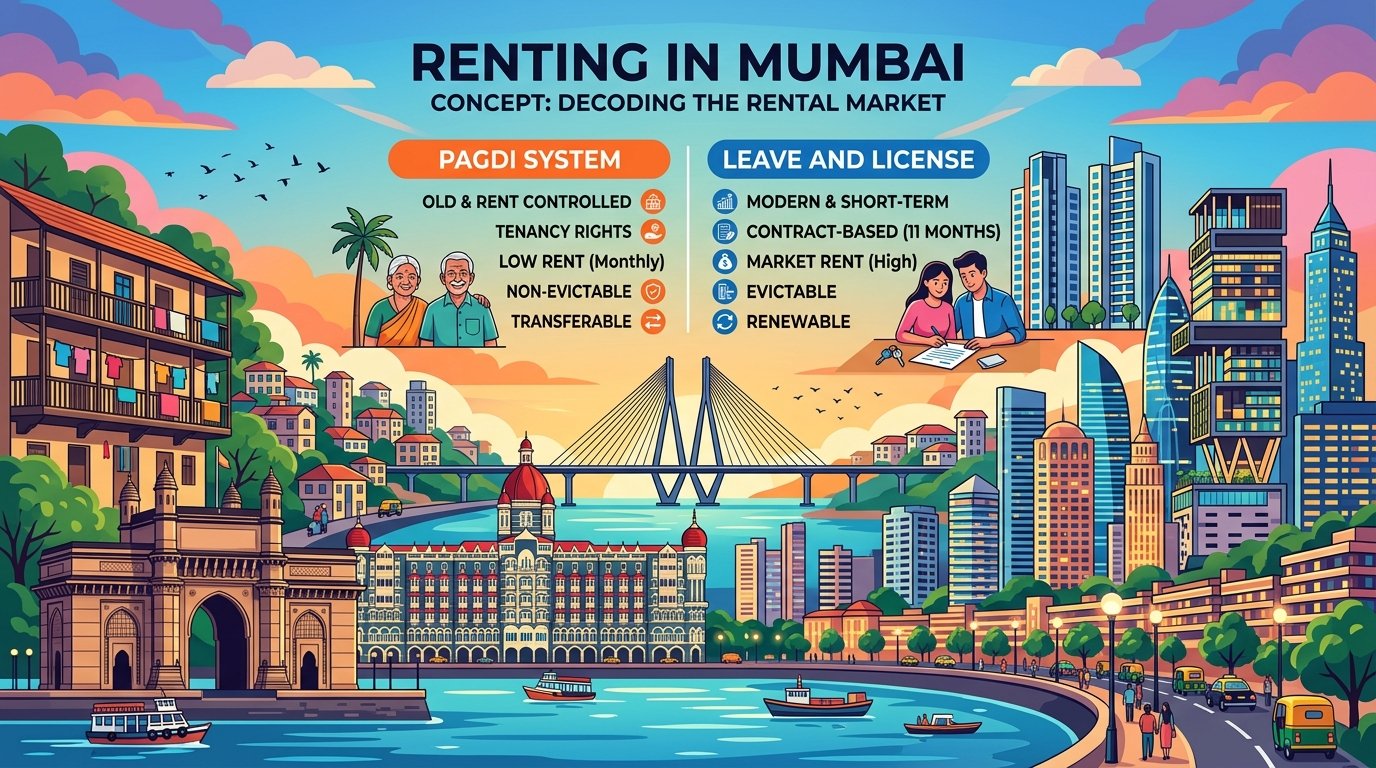
On one side is the ancient, highly protective Pagdi system governed by the Maharashtra Rent Control Act, where tenants pay pennies for prime real estate in heritage buildings. On the other side is the modern, landlord-friendly Leave and License system, which dictates the massive deposits, heavy brokerages, and strict 11-month contracts prevalent in the suburbs today. This comprehensive guide breaks down these two systems in exhaustive detail, explaining your rights, risks, and obligations in the unforgiving Mumbai rental landscape.
1. The Maharashtra Rent Control Act & The Pagdi System
To truly understand old Mumbai (especially prime South Mumbai areas like Colaba, Fort, Malabar Hill, and Marine Drive), you must understand the Pagdi system. Established before independence to prevent exploitation during severe housing shortages caused by wartime migration, this system was formalized by various Rent Control Acts, culminating in the current Maharashtra Rent Control Act, 1999.
What is the Pagdi System?
Under the Pagdi system, a tenant pays a massive lump sum upfront (the "Pagdi") to the landlord. This amount is often very close to the actual open-market purchase value of the property. In exchange, the tenant is granted incredibly strong tenancy rights and pays a nominal, virtually frozen monthly rent. It is not uncommon to see families paying as low as ₹500 to ₹1,000 per month for a sprawling, sea-facing apartment that would command ₹2,00,000 on the modern open market today.
- Co-Ownership Rights: A Pagdi tenant acts almost like a co-owner. They cannot be evicted easily, and their tenancy rights can be legally passed down to their heirs across multiple generations.
- Selling Tenancy Rights: A tenant can legally "sell" or transfer their tenancy rights to a new tenant. However, to officially approve the transfer and change the rent receipts, the landlord is typically entitled to a significant cut (usually 30% to 35%) of the transaction value.
The Severe Decline of the Pagdi Ecosystem
While fantastic for legacy tenants who locked in their rates decades ago, the Pagdi system fundamentally destroyed landlord incentives to maintain their buildings. This led directly to the crumbling, dangerous, and sometimes collapsing heritage structures seen in South Mumbai today. Because landlords receive only a nominal rent, they refuse to pay for major structural repairs. Simultaneously, tenants refuse to vacate because they cannot afford market rents elsewhere. This results in decades-long legal stalemates in the Bombay High Court. The government is actively trying to phase out this system through attractive redevelopment schemes (cluster redevelopment), but millions still live under its complex umbrella. It is highly discouraged for modern migrants to attempt to "buy" into a Pagdi property today due to the immense legal grey areas, black money components, and structural risks involved.
2. The Modern Era: Leave and License Agreements
Because the Rent Control Act made it nearly impossible for landlords to evict tenants, raise rents, or maintain profitability, the modern Mumbai rental market (especially in the thriving commercial suburbs like Bandra, Andheri, Powai, and Malad) completely bypassed the traditional "lease" system. Instead, modern residential renting in Maharashtra is governed entirely by the Leave and License Agreement under Section 24 of the Maharashtra Rent Control Act.
What is a Leave and License Agreement?
Unlike a traditional "lease," which legally creates a property interest or estate for the tenant, a Leave and License agreement merely grants you "permission" (a license) to occupy the premises for a specific duration and a specific purpose. The legal possession and ownership of the property remain entirely with the landlord (the licensor). This distinction makes it incredibly easy for landlords to evict tenants once the license expires, effectively stripping modern tenants of the iron-clad protections found in older rent control laws.
Key Features of Mumbai Leave and License
| Feature | What it Means for You as a Tenant |
|---|---|
| Mandatory Registration | In Maharashtra, EVERY Leave and License agreement must be officially registered and stamped, regardless of the tenure (even for a standard 11 months). Unregistered agreements are legally invalid and invite severe penalties for the landlord. Fortunately, this can be done entirely online via the Maharashtra IGR portal using biometric Aadhaar authentication, avoiding painful trips to the sub-registrar office. |
| 11 to 33 Month Tenures | While 11 months is the absolute standard, many landlords in Mumbai are open to registering 22-month or 33-month agreements with a pre-defined annual rent escalation (usually 5% to 10%) to save on repetitive registration costs and annual brokerage fees. |
| Police Verification | Mumbai Police require mandatory intimation of tenant details for national security. This is usually submitted online via the Mumbai Police citizen portal by the broker or landlord. |
| Heavy Deposits | While not as extreme as the 10-month rule in Bangalore, standard deposits in Mumbai range from 3 to 6 months of the highly inflated monthly rent, requiring massive upfront liquidity from the tenant. |
3. Rent and Deposit Realities in Mumbai
Mumbai operates on distinct, highly fragmented micro-markets. Renting a tiny 1BHK in Bandra West might cost you ₹60,000, while the exact same configuration in Borivali might cost ₹25,000, and in Navi Mumbai, just ₹15,000. When budgeting for a move to Mumbai, you must heavily factor in these hidden costs:
- Heavy Brokerage Fees: Brokers absolutely dominate the Mumbai market; finding a direct owner is rare. Standard brokerage is exactly one month\'s rent, paid at the time of signing. If you renew the lease next year, the broker will shamelessly demand a half-month or full-month renewal fee, which is a highly controversial but prevalent local practice. Always negotiate this out of the initial contract.
- Society NOCs: Mumbai cooperative housing societies (CHS) wield immense, almost dictatorial power. Before you can move in, the landlord must obtain a formal NOC (No Objection Certificate) from the society committee. Some ultra-conservative societies illegally try to ban bachelors, pets, or people of specific dietary habits (like non-vegetarians), though this is technically unconstitutional. Always verify the society's culture before paying a token amount to a broker.
- Compact Living: Space is a luxury in Mumbai. Be prepared to pay premium rates for "carpet areas" that would be considered incredibly small in cities like Delhi or Hyderabad. An 800 sq ft apartment is often marketed as a luxury 2.5 BHK.
4. Protecting Yourself During Leave and License Renewal
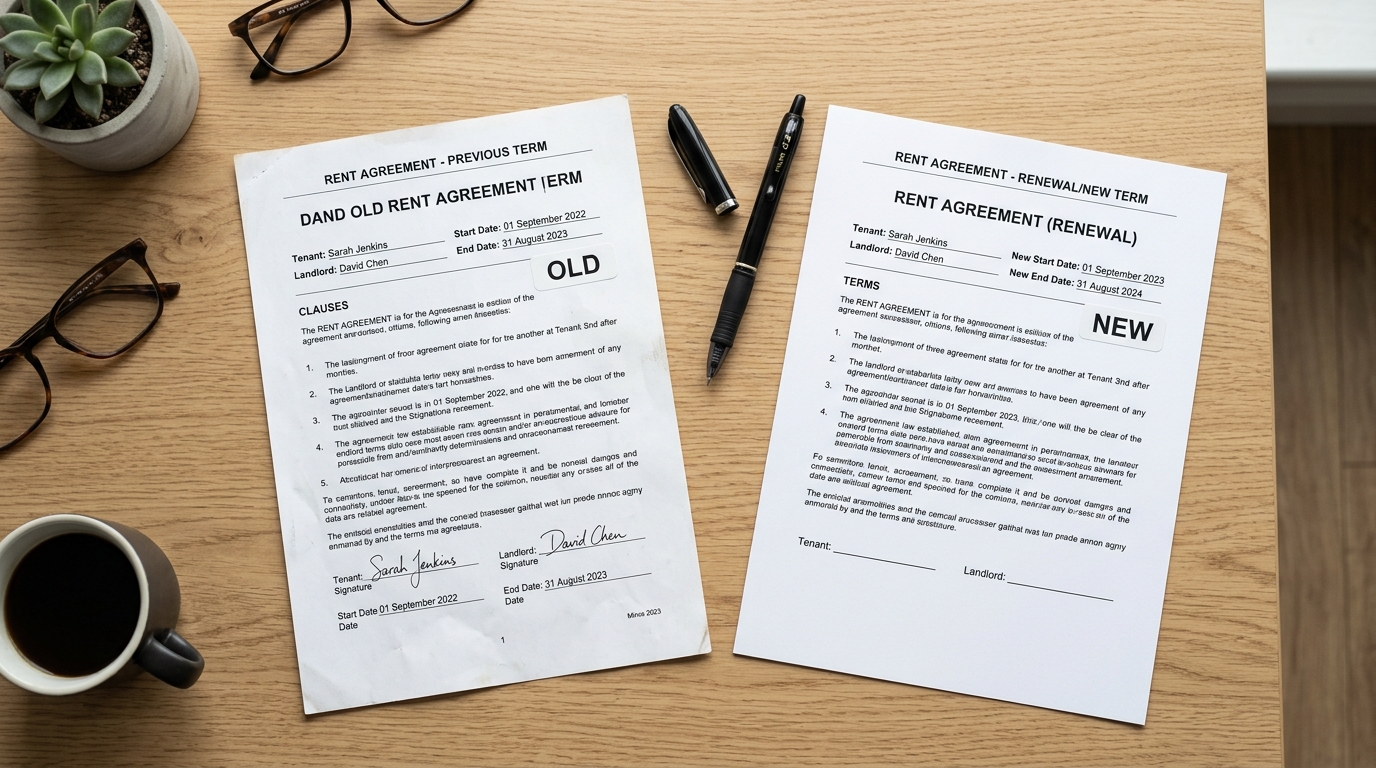
Because the modern Mumbai market operates almost entirely on 11-month Leave and License contracts, renewal time is a significant friction point. Under the law, a Leave and License agreement does not automatically renew. If you stay in the property after the 11th month without registering a new agreement, you technically become an illegal trespasser, losing all your rights and protections. The landlord can initiate immediate eviction proceedings.
To protect yourself, begin renewal negotiations at least 45 days before the expiry date. Agree on the rent escalation amount in writing (usually 5% to 10% in Mumbai, compared to 0% to 5% in other cities). More importantly, negotiate the renewal brokerage fee aggressively. Many brokers in Mumbai will demand another half-month's rent just to print a new agreement, which is a legally questionable practice. You can easily refuse this if you bypass the broker and deal directly with the landlord for the renewal.
5. What Happens to Your Heavy Deposit?
A common horror story in Mumbai is landlords refusing to return the massive 3-to-6 month security deposit when the tenant vacates. Because the deposit amounts are so huge (often running into lakhs of rupees), landlords sometimes spend the money and don't have the liquidity to refund it immediately. Always insist on a specific clause in your Leave and License agreement stating that the deposit must be refunded via bank transfer on the exact day you hand over the keys and vacate the premises. Do not accept post-dated cheques or vague promises of "I will send it next week."
Conclusion
Unless you are inheriting a centuries-old South Mumbai flat, your renting experience will be entirely governed by the strict, landlord-friendly Leave and License framework. To survive the Mumbai rental market, ensure you have heavy liquidity for deposits and brokerage, register your agreement mandatorily through the government\'s e-registration portal, and always secure a formal NOC from the housing society before booking your movers and packers.