Receiving an eviction notice from your landlord is a deeply stressful and intimidating experience. The sudden threat of losing your home can cause panic, leading many tenants to vacate immediately even when the eviction is entirely illegal and unjustified.
However, the law in India provides immense, robust protection to tenants. A landlord cannot simply throw you out onto the street overnight because they found a higher-paying tenant or because they dislike you. Eviction in India is a strict, formalized legal process governed by the Transfer of Property Act and specific state Rent Control Acts. This comprehensive guide explains what constitutes a legal eviction, how to identify illegal harassment tactics, and the exact steps you must take to defend your rights when served with a notice.
1. Understanding the Legal Grounds for Eviction
A landlord cannot evict you arbitrarily. To initiate a legal eviction before the expiration of a lease, the landlord must have a "bona fide" (genuine and legally recognized) ground. The most common valid grounds across Indian states include:
- Non-Payment of Rent: The most straightforward ground. If you consistently fail to pay rent (usually for more than two consecutive months) despite written reminders, the landlord can legally initiate eviction.
- Subletting Without Permission: If you rent out a portion or the entire property to a third party (like setting up an unauthorized PG) without the landlord\'s explicit written consent.
- Misuse of Property: Using a residential property for commercial, industrial, or illegal activities.
- Structural Damage: Causing severe, irreversible damage to the property, or making unauthorized structural modifications (like tearing down a wall).
- Bona Fide Personal Need: The landlord genuinely requires the property for their own occupation or for their immediate family, and they can prove they have no other suitable vacant property in the same city.
2. The Difference Between Legal Eviction and Illegal Harassment
It is crucial to differentiate between a legal, court-backed eviction process and illegal intimidation tactics (often called "self-help evictions").
If your landlord resorts to these illegal tactics, do not vacate out of fear. Instead, immediately dial the police emergency number (112). The police are obligated to intervene, restore your access to the property, and warn the landlord against taking the law into their own hands.
3. How the Legal Eviction Process Actually Works
If the landlord has a valid ground, they must follow this strict, time-consuming legal procedure:
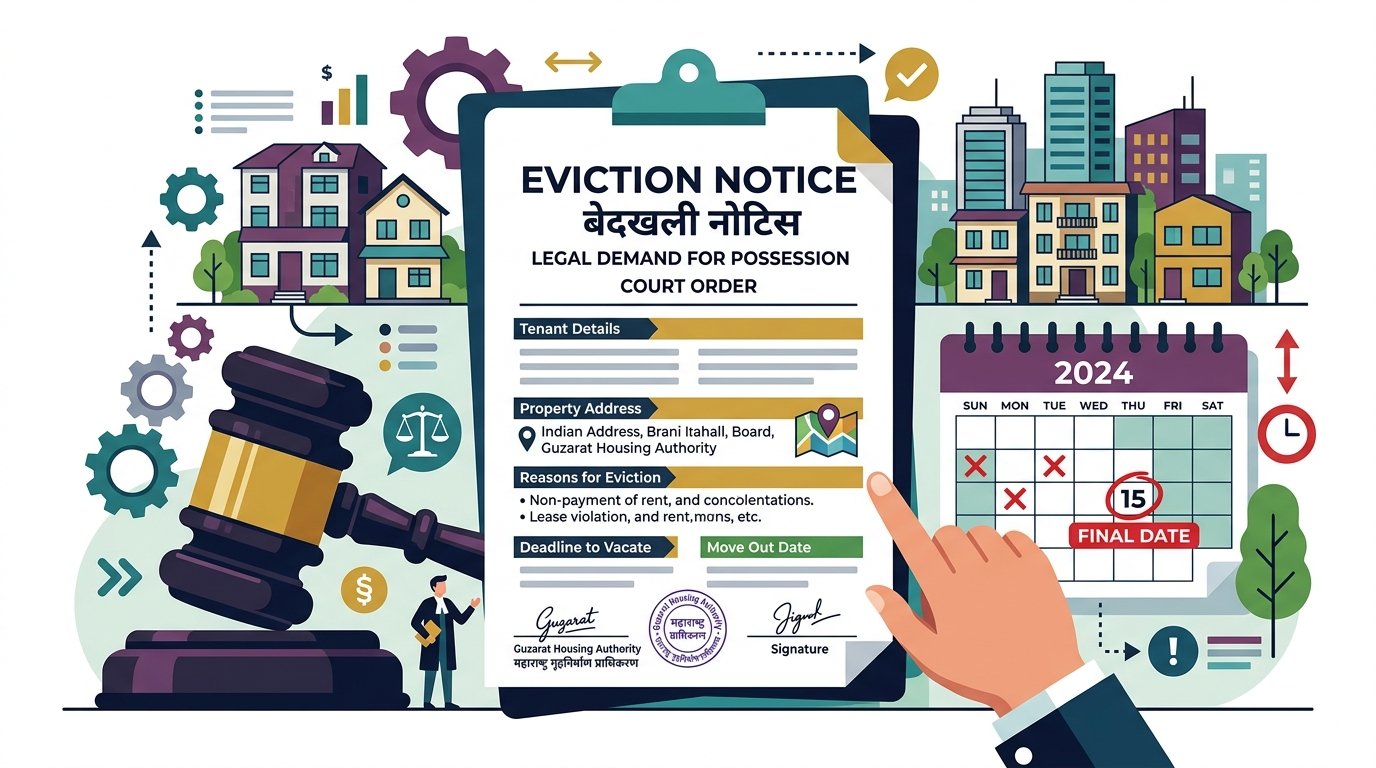
- The Legal Notice: The landlord\'s advocate will send you a formal, written legal notice via registered post. This notice must clearly state the grounds for eviction and provide a statutory deadline (usually 30 to 60 days) for you to rectify the issue (e.g., pay the pending rent) or vacate.
- Filing a Suit: If you do not vacate by the deadline, the landlord cannot just come and throw your bags out. They must file a formal eviction suit in the competent Rent Court or Civil Court.
- Court Hearings: You will receive a summons from the court. You have the full right to hire a lawyer, present evidence, and defend yourself in court.
- The Eviction Order: Only if the judge rules in the landlord\'s favor will the court issue a formal eviction decree. Only court bailiffs, accompanied by local police, have the authority to physically execute this order.
4. Step-by-Step Guide: How to Respond to a Notice
If you receive a formal legal notice for eviction in the mail, you must take immediate, calculated action:
Step 1: Do Not Ignore It
Ignoring a legal notice is the worst mistake a tenant can make. If you ignore it and the landlord files a suit, the court may pass an "ex-parte" order (ruling against you because you didn't show up). Always accept the registered post and read it carefully.
Step 2: Analyze the Claims
Read the notice to identify the exact grounds the landlord is claiming. Are they accusing you of unpaid rent? Do you have bank statements proving you paid it? Are they claiming bona fide need, but you know they just want to rent it to someone else for a higher price? Gather all your evidence, including your registered rental agreement, rent receipts, and bank statements.
Step 3: Draft a Legal Reply
You must respond to the notice within the stipulated timeframe. It is highly recommended to hire an advocate to draft a formal "Reply to Legal Notice." In this reply, categorically deny any false allegations and present your facts. Often, a strong, well-drafted legal reply from a lawyer is enough to make an aggressive landlord back down from a frivolous claim.
Step 4: Continue Paying Rent
This is critical. Even while the dispute is ongoing, you must continue to pay or offer to pay your monthly rent on time. If the landlord refuses to accept your bank transfer or cheque to build a fake "non-payment" case, you must send the rent via money order or legally deposit it with the local Rent Controller/Court. If you stop paying rent out of anger, you automatically give the landlord a valid legal ground to win the eviction suit.
5. Protection Under the Model Tenancy Act
If your state has adopted the new Model Tenancy Act, the process is streamlined to be faster (disputes resolved within 60 days by a Rent Court). However, it also strictly protects tenants from arbitrary mid-lease evictions. The MTA explicitly bans landlords from cutting off electricity or water during disputes, and allows tenants to complain directly to the Rent Authority if such harassment occurs.
Conclusion
An eviction notice is not an immediate order to pack your bags; it is merely the first step in a legal process where you have the absolute right to defend yourself. By understanding the valid grounds for eviction, recognizing illegal harassment tactics, and responding formally through legal channels, you can successfully protect your home and your rights against unjust landlords.